
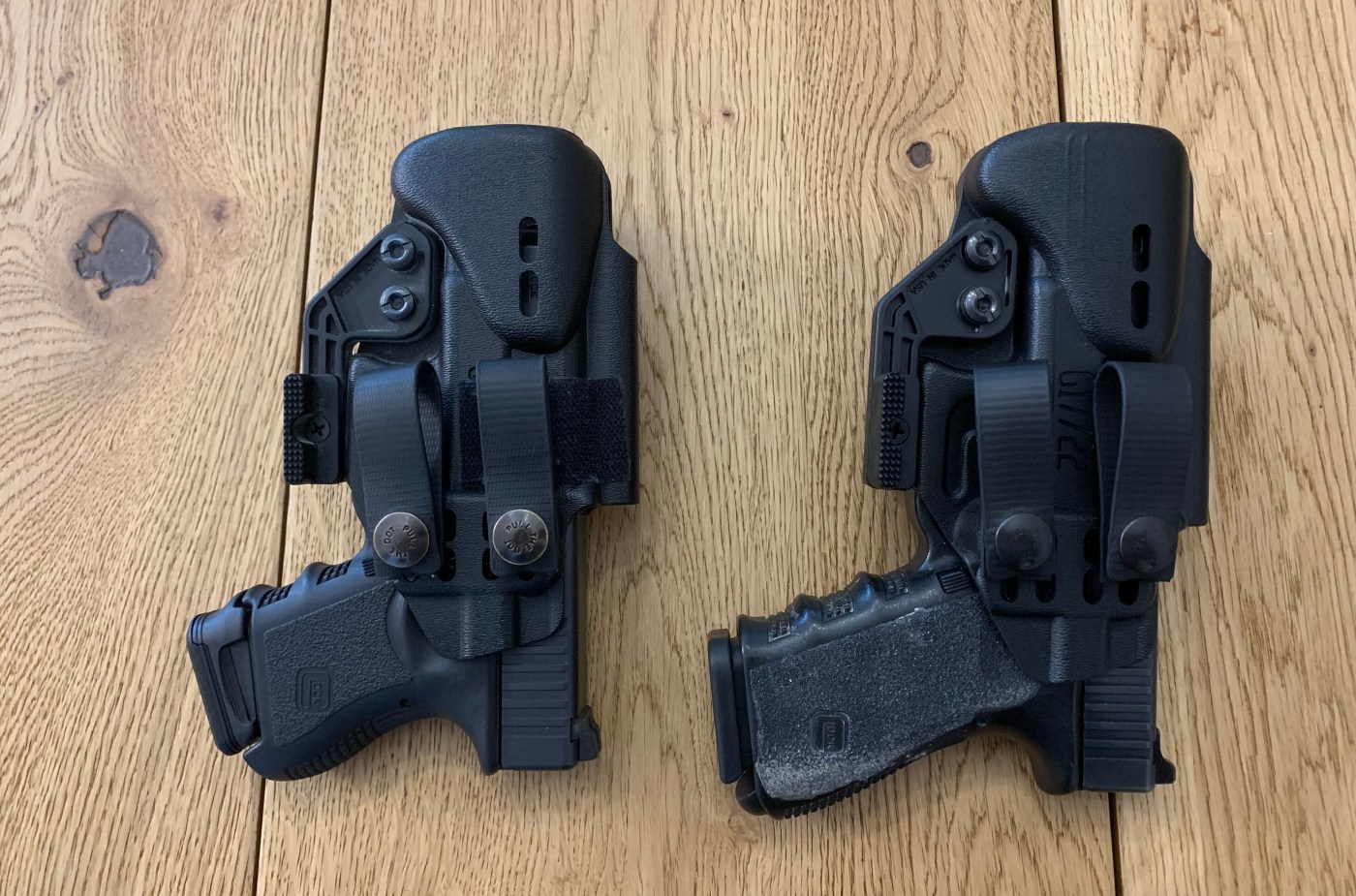
For many years I trained with and carried the same gun. Eventually, I switched to utilizing a dedicated training, and dedicated carry, gun. there is a lot of merit for most people to apply most of their practice time to a single gun, but a similar platform is the next best thing.
Modern pistols are exceptionally reliable compared to most manmade things, but if you shoot a lot, things break. The major components of a modern gun may last indefinitely for most shooters, but internal parts will break, eventually. And, you never know when that break will occur. Therefore, having two matching guns, one for training, and one with minimal rounds put through it and used only for carry, is in order.
The late Todd Green used to test different pistols and, being a high-volume shooter, he often put 50,000 rounds a year through the same gun. Eventually, he started using a dedicated practice gun and dedicated carry gun because he experienced too many breakages to leave him comfortable with carrying the practice gun. I often ran into Todd at the range, as we both used the same indoor range for a long time, and I put hands on a number of those guns he would torture test. Todd was a stickler for training with, and carrying, only one gun for prolonged periods of time. He was adamantly against having a carry rotation of different guns. His perspective on that certainly influenced me, and I have stuck to that philosophy, for the most part, for a long time.
I used to train with and carry, almost exclusively, a Glock 19. Eventually, I turned to training primarily with a 19 but carrying a Glock 26. Different guns, yes, but as similar as it gets except for smaller dimensions on the muzzle and ass end. The Glock 19 works better as a full-blown training and competing gun, as the full-size grip facilitates reloads better, and that sort of thing. The 26, though, does carry easier for myself, and with the 12 round Magpul magazines I get a full firing grip, thus the transition between the two guns is quite seamless, so this is the formula I stick to, and have been doing so for many years now.
Every now and then I deviate and train with a different gun, such as the Walther Q5 I shot on and off in the past year and a half as my dedicated red dot gun, or revolvers that I used in the past, etc…, but I always come back to the Glock 19/26 combination. Having a separate practice and carry gun is the best way to ensure reliability with the gun you are actually wearing as life saving equipment, and having matching guns makes good sense so that your training corresponds to what you are actually carrying. If a smaller gun works better for carry, then a more compact model of your training gun, in the same make and family, makes sense, so that your training corresponds as seamlessly as possible to your carry gear.
I am outspoken about training from concealment, as that is the only relevant carry mode to an armed citizen concealed carrier, and training from open rigs, or the horrendous battle belt, is putting in time with equipment that has nothing to do with your lifestyle (unless you are a dedicated competitive shooter or law enforcement officer). Beyond always training from real concealment, consider using the same, or as similar as possible, holsters between your training and carry gun. the holster drastically influences the draw process, and you want that process to be identical between your training gun and your carry gun.
Live fire practice is essential. To buy the ammo that I use for training at the best possible price, go to:
https://www.ammoman.com/9mm-luger-federal-champion-115-grain-fmj-wm5199-1000-rounds
 Reflex Handgun
Leave a comment