
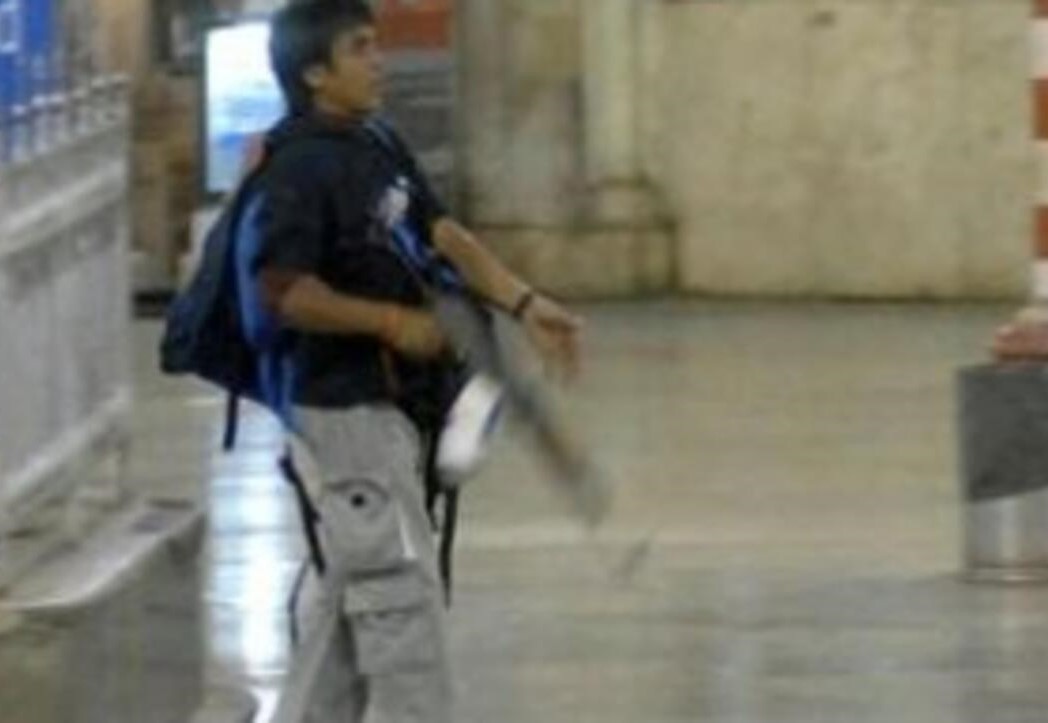
As the world devolves into violence, and there is certainly an increase in violence over the past several years on the streets of the United States thanks to soft-on-crime political stupidity, the prepared citizen should focus on the tools and skills that matter most. I have been one of the more vocal trainers and writers in this sphere concerning the elevated threat of mass terrorist attacks that are, sadly, likely inbound in the near future. I have also spoken for a long time about the increase in multiple assailant and gang related crime. All such topics tend to lead the sound-minded citizen to focus on their rifles and shotguns. For good reason, certainly. However, I return to a principle I have long preached: it will be a handgun issue.
Let me first, again, say that having fighting long guns readily available in the home for quick deployment should be a no-brainer. A rifle or shotgun should be a standard part of your home defense plan in this day and age of home invasions committed by large numbers of heavily armed intruders. A rifle should also factor into your overall preparedness to secure your community, your nation, and your liberty. Therefore, have the tools and the training for the effective utilization of the rifle, and perhaps the shotgun as well if that is your preferred home defense weapon.
Heightened Threat
That being said, even when discussing the looming reality of terrorism, the armed citizen is most likely going to face the fight with the pistol worn on their person, as the fight is most likely to materialize in public places outside of the home. While I am not necessarily apposed to having a rifle in the vehicle, it must be well secured as the theft of the gun is a more likely scenario then the gun every being deployed. Further, the nature of violence is fast and surprising, and you will, again, most likely use the handgun on your person and never have time or ability to make it to the vehicle and grab a staged rifle. Should we experience an October 7th style attack you certainly want a rifle ready to roll in your home. However, I suspect a Mumbi-style attack is the more realistic scenario to happen in CONUS, and during such, you will be carrying your concealed handgun (hopefully) and not be able to make it in time to a rifle.
Handgun Training Priorities
Consider the gun you are carrying and your ability to deal with the heightened likelihood of long-gun wielding attackers. Yes, that is a bad situation, but there have been many instances in which pistol-armed defenders have prevailed against rifle-armed attackers. You should, however, consider your ability to make accurate hits at further then conventional distances. Spending more of your training time working on handgun accuracy, at further distances, makes good sense in our current environment. Along with this you may want to re-evaluate what you are carrying. Stepping up from the tiny 380 pocket pistol or snub revolver that you carry in your pocket might make sense at this point. Obviously, any gun is much better than no gun, but even pistols as small as the Sig P365 offer far more capability. A serious pistol, and a spare magazine, or more, on person, is a sound decision.
Speaking of that 380 pocket pistol or snub revolver, I suggest not retiring it to the safe, but adding it as a backup gun. I have carried a BUG infrequently throughout my life as an armed civilian (I think any uniformed LEO should carry a BUG at all times), but I do so more often of late. I don’t carry a BUG daily, but I do add it when out in public places with my loved ones. If you find yourself in a bad situation when with your family, a BUG may be a significant force multiplier as it allows you to arm a friendly who may be minimally trained, but not carrying. Further, while needing a BUG as a concealed carrier is extremely unlikely compared to an LEO (police officers face a far more likely struggle against a disarm attack as they carry openly and interact at close proximity with felons), under the direst of circumstances it offers a second firearm immediately at the ready, should you need it.
Along with the addition of a BUG to your carry, you need to train with it. Be proficient in drawing the BUG from the alternate carry mode that you use for it (likely pocket or ankle). Your BUG is almost certainly a small gun, likely a pocket auto or small-frame revolver, so it is, by definition, probably more difficult to shoot well compared to your primary carry gun. This leads me to suggest another controversial utterance. I encourage you to prioritize firearms training in this order:
1 – Primary Concealed Carry Handgun
2 – BUG/Deep Concealment Handgun
3 – Home Defense/SHTF Long Gun.
While your rifle should remain a consistent part of your preparedness, I remind you that even this heightened threat environment will likely demand a handgun solution from the citizen.
Suggested Drills
So, while all such suggestions are theoretical, how can we make them actionable? I encourage you to add two, yes, just two, shooting drills to your live fire training. These are two exercises that I think offer a more realistic skills development for facing possible heavily armed attackers at greater-than-conventional distance. Both drills are of my own distillation:
10-Clean-at-10
Set up a B8 target, send it to ten yards, and draw and fire a single shot and make sure it is in the black. X ring, 10 ring, and 9 ring all count, that does not matter here, just be in the black. Do this ten separate times, and make sure you get a hit in the black every time. Put it on a timer and start with an initial goal of three seconds, then work towards two seconds.
This drill focuses on a very realistic sized target at a very likely distance. Essentially, this drill will build a consistent ability to make a rapid head shot out to ten yards. If you study actual active shooter incidents in which the killer has been neutralized by a handgun equipped citizen or police officer, you will see the merit and benefit of this drill. Try it.
Three-at-a-Quarter
I introduced this drill and the reasons for it some years ago, but I will bring it back for this article as it is so fitting. Many will argue that being able to make a head shot at 25 yards is a valuable skill for the serious handgunner. I agree, and this transposes to, basically, consistent hitting within the black of a B8 target at twenty-five yards. The practical issue, however, is that mass killers move around, and don’t stand stationary, and in reviewing the history of such incidents, multiple hits to the body, quickly, is the likely paradigm for stopping these threats. If the threat is wearing body armor, or a bomb vest, go for the head. Got it. But fast engagement, putting rounds on the threat, even if they have body armor on, stops the killing, and this has been proven multiple times. I would rather get multiple hits on the body of a threat, quickly, then try to make a distant head shot with innocents around.
Set up an IDPA target, or use the 8 ring of a B8 target. From twenty-five yards, draw and fire three rounds, as fast as possible, but trying for all three rounds in the eight-inch down-zero ring, or in the eight-inch ring of the B8. An initial goal of six seconds is sound, and a rock star can do it in three seconds.
See a demo of Three-at-a-Quarter:
So, there you have it. Add these two drills to your shooting routine and you will be better equipped for facing such worst case scenarios.
For the best prices on ammunition, shop Ammoman.com https://www.ammoman.com/
For the ammo I use for training, go to: https://www.ammoman.com/9mm-blazer-brass-124-grain-fmj-5201-1000
 Reflex Handgun