
This is going to ruffle some feathers, but please consider the following carefully. My reservations regarding small pocket autos chambered in 380 acp has never been due to the cartridge, but to the platform itself, and how they perform in the intended role for deep concealment or backup, carried in alternate concealment modes.
Are tiny pocket autos suitable for deep concealment or backup gun use? This is a topic that comes up on my radar every time there is a notable release in the firearms industry related to micro pistols, particularly those chambered in 380. At this moment, the mover and shaker in this sphere is the relatively new Smith and Wesson Bodyguard 2.0. While the gun reviewers on YouTube have you thinking that this thing is extraordinary, let’s review history:
The Seecamp
The Seecamp pistol, chambered in 32 acp, was released in 1985, and was quite revolutionary for its time. All stainless steel, yet only 10.5 ounces in weight, it holds 6+1 rounds of 32 acp. The gun is exceedingly small in profile, even smaller than the contemporary micro 380 autos. Yet, the thing has no sights on it, greatly limiting its potential for anything beyond point-blank range. It did serve as a true pocket pistol, having a bottom-latch mag release, hated by many, but better suited for reliable pocket carry, as inadvertent magazine ejection is a problem for guns carried in the pocket. The Seecamp was truly innovative and highly desired at the time.
The Original Ruger LCP
The Ruger LCP was an absolute paradigm shift in the concealed carry market when it hit the scene in 2008. It was a blatant rip-off of the Keltec P3AT pistol, but having the Ruger name, proved far more successful. The thing was plagued with reliability issues at first, thought it improved over time. It took the concealed carry market by storm, and was the favorite among people who wanted to carry a gun with the least amount of lifestyle adjustment necessary.
The Original Smith and Wesson Shield
The Smith and Wesson Shield, proving the most notable of the “single stack” 9mm guns, took the carry market by storm, ushering in an overall preference among the masses for small guns chambered in 9mm. The Shield is very reliable, and shoots very well, even though it is quite small, being dwarfed by even a Glock 26. Still, it is much larger than the 380 pocket guns.
The Sig Sauer P365
The Sig Sauer P365 ushered in the error of higher-capacity micro guns. Whereas the popular “single-stack” 9mms dominated the carry market before this gun, the 365 revolutionized the capacity potential for tiny guns. The Sig is even smaller than the original Shield, yet holds 10+1 rounds of 9mm, compared to 7+1. Relatively reliable, and chambered in 9mm, it begs the question, why compromise by going to a 380 unless the absolute smallest profile is needed for pocket carry? The P365 is probably the most significant change in carry guns in decades.
The Ruger LCP Max
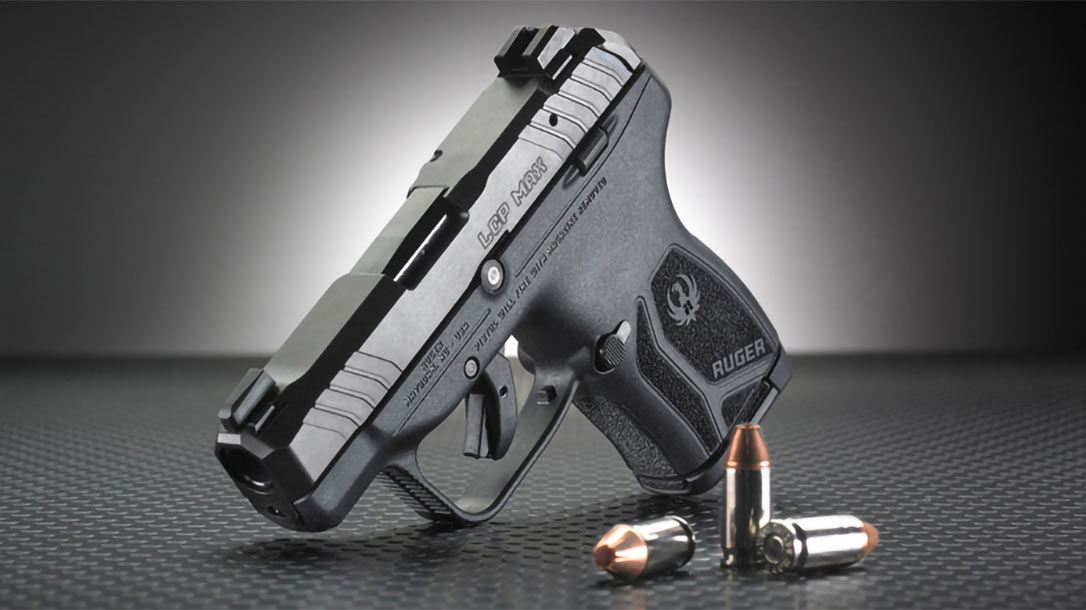
Following the P365, Ruger released the LCP Max. This is the first higher-capacity micro 380. Being significantly smaller than even the P365, yet holding 10+1 rounds in the flush-fit magazine, the LCP Max was quickly deemed the king of pocket carry autos. Realistically, as small as the P365 is, many can’t make it work for pocket carry, yet the smaller LCP Max works.
The Smith and Wesson Bodyguard 2.0
Now, at the time of this writing, the new challenger for best pocket-auto ever is the Smith and Wesson Bodyguard 2.0 chambered in 380. The Original Bodyguard 380 was never as big a hit as the LCP, but this re-designed 2.0 seems to be widely heralded as a more ergonomic and better shooting gun than the LCP Max.
So, in a world of teeny-tiny 380 pistols that hold a staggering 10+1 in flush-fit magazines, and 12+1 in extended magazines, are we not at the pinnacle of performance capable of being carried in realistic pockets? While the Sig P365 is uber-small, the LCP Max and the Bodyguard 2.0 are surprisingly smaller still, making all the difference for many people regarding fit in pockets, or as very small, and very light-weight, backup guns. While 380 is a sub-service caliber, modern ammunition innovation has made it better than ever, so why step up to a 9mm?
Further, why even bother with the antiquated snub revolver, with a pathetic 5 or 6 round capacity? Compare 5 rounds of 38 Special to 10+ rounds of 380, in an even smaller package. How can there possibly be a comparison?
So, these 380s are the ultimate deep concealment or backup pistols, no? On paper, that would seem to be the case. However, there remains one issue:
Reliability
Now, before you get hysterical and point out all the videos on YouTube, where the guntubers are mag-dumping the Bodyguard 2.0 into the berm, declaring it the best thing since sliced bread, I encourage you to look at the support forums. Case, after case, after case, of failures of various kinds. I am not sure if it is the step down from 9mm to 380, or more likely the step down in size, but the 380 pocket guns do not have the reliability of the Sig P365 class of 9mm guns. And, of course, they can’t compare to snub revolvers for reliability. Also, if you declare that you have one, and it has been 100% reliable, that is fortunate, but I would also ask how strenuously you have tested it.
Not only are the 380s finicky with ammo, they are EXTREMELY sensitive to operator error. This sensitive nature is the primary reason that I simply never adopted any 380 pocket gun.
These small guns are very prone to malfunction from slide obstruction. Even the slightest resistance against the reciprocating slide that would have no effect at all on a larger auto will cause a failure to feed the next round in these tiny guns. This issue is made worse by the fact that, being so tiny, it is very easy to induce such a malfunction. You cannot gauge real-world reliability based on YouTube shooting with a perfect grip under perfect conditions.
The small profile of these guns also cause issues with user-induced error by actuating controls. If a sub-optimal grip is achieved (can’t imagine that happening in a real fight) then the magazine can be easily dropped, reducing the gun to a single shot. Further, these guns are notorious for dropping the magazine in the pocket while being carried because pressure is placed on the mag release due to routine movement.
So, even if they invent a tiny 380 pocket pistol that holds 1 billion rounds, unless these inherent problems with tiny autos go away, I will stick to the small revolver for deep concealment and backup gun use. What is more important in a fight for your life, shots 1-5 or shots 6-infinity, yet with no guarantee of getting past shot 1?
If you choose to use a 380 micro pistol, my advice is to test it vigorously. Draw from your pocket, with a less-than-ideal grip, and fire rapidly with one hand. If you wear it as a BUG on the ankle, do the same, and see if it will perform without malfunction and without dropping the magazine. Also, verify that it does not go out of battery, or drop its magazine, during carry.
I am not saying to avoid micro 380s. I am simply urging you to comprehensively vet the reliability if you choose to utilize one. The P365 is not much larger, but is chambered in a service caliber, and is significantly more reliable. Small revolvers, though having limited ammo capacity, can be chambered in more powerful rounds and, more importantly, are extremely reliable in the deep concealment or backup gun capacity.
Careful consideration and significant testing for reliability is required if you want to utilize the extremely small auto-loading 380 pistols. Spend the effort to vigorously test the realistic, required, reliability of such guns. Otherwise, use a Sig P365 or a revolver for deep concealment or backup gun needs.
For the best prices on ammunition, shop Ammoman.com https://www.ammoman.com/
For the ammo I use for training, go to: https://www.ammoman.com/9mm-blazer-brass-124-grain-fmj-5201-1000
 Reflex Handgun
Leave a comment